An interview with Jeff Cole, Head of Operations at Goodwin-Cole
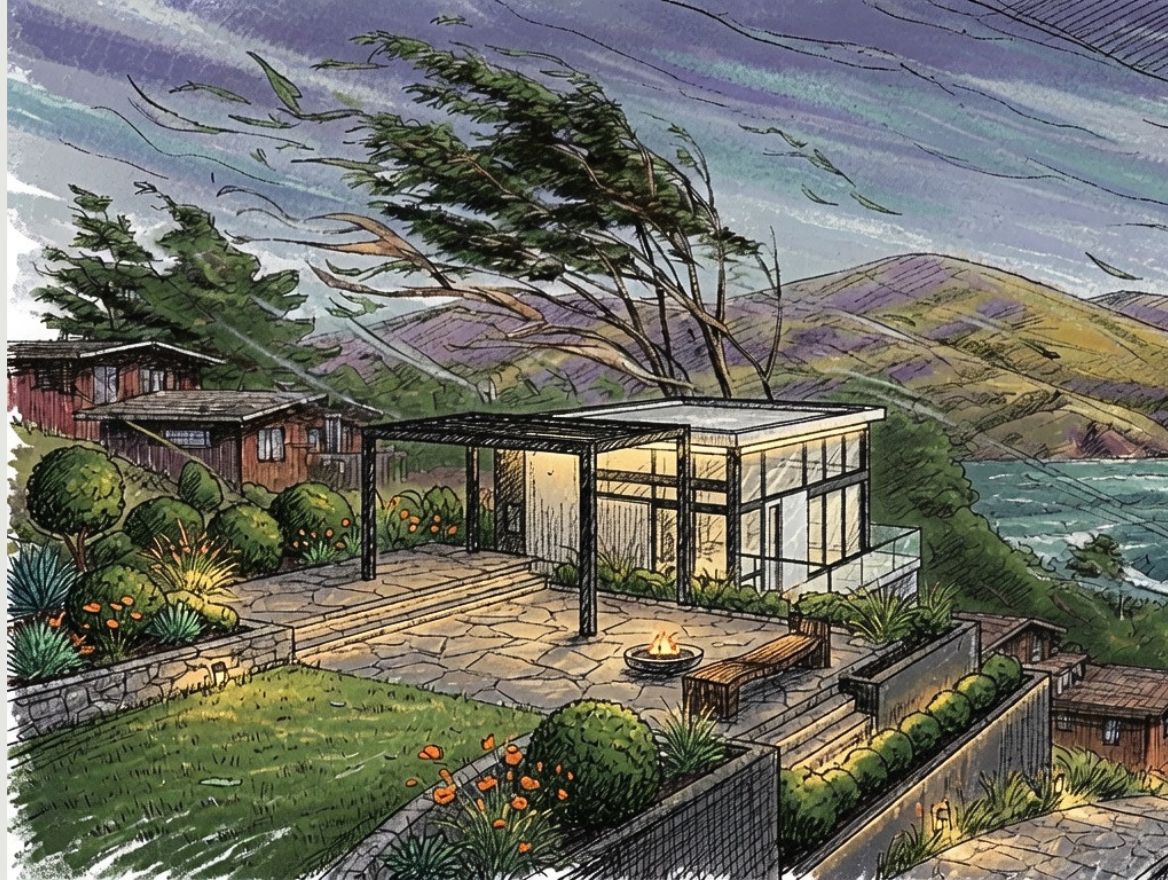
If you've spent any time outdoors in Northern California over the last several years, you've likely noticed the weather has become harder to predict — and harder to ignore. Warmer months that once felt relatively calm are increasingly punctuated by strong, unexpected gusts that can catch homeowners off guard. For those who've invested in outdoor shade structures — awnings, drop screens, shade sails, louvered pergolas — the question of durability has never been more pressing.
We sat down with Jeff Cole, Head of Operations at Goodwin-Cole, to talk about what it actually takes to design, install, and maintain shade products that stand up to today's wind conditions — and why cutting corners with a DIY approach can cost you far more in the long run.
The Wind Has Changed — And So Have the Stakes
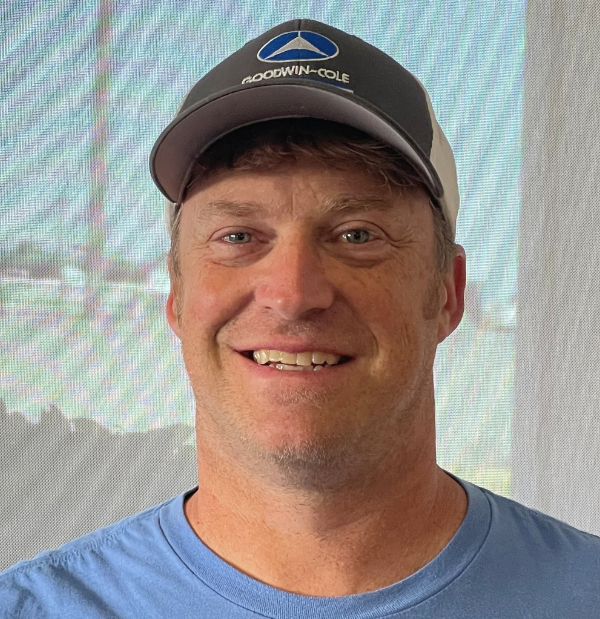
Ask Jeff whether wind conditions in Northern California have shifted noticeably in recent years, and the answer is immediate: "100%." He points to a measurable uptick in both the frequency and severity of extreme wind events over the past five to ten years — a trend most residents have felt firsthand.
But here's what's telling: despite that increase, Goodwin-Cole receives very few calls for wind-related service, repair, or warranty work — even after significant storms. "For the amount of products we have out there in Northern California," Jeff explains, "we get very few phone calls. If we weren't installing things the right way, you'd be expecting a lot of calls. And a lot of failure."
That low failure rate isn't luck. It's the result of deliberate engineering decisions made at every stage of the process — from the products selected to the way they're attached to a structure.
Engineering for Today's Conditions
When Goodwin-Cole installs a shade product, the team thinks well beyond the fabric or the canopy itself. Jeff describes a continual focus on the structural integrity of installations: how products are attached, whether to a building wall, roofline, or posts; how many attachment points are required; what materials are used; and whether the footings meet current engineering standards.
"We have to consider whether we need extra attachment points for today's weather," he says. "Does it need to be steel? Do we need to add structural capability to the building?"
California's building standards — among the most rigorous in the world — play a role here too. Contractors who operate within that framework are accustomed to building things that simply don't fail. And Goodwin-Cole's decades of experience in the region have given the team a nuanced understanding of where the line is between doing enough and overkill.
"With Goodwin-Cole's long history of building in this region, we've learned a lot over the decades," Jeff notes. "And we're also keeping up with all the changes that are going on."
Which Products Perform Best in Wind?
Not all shade products are created equal when the gusts pick up — but Jeff's guiding principle is straightforward: the best products for windy environments are the ones you can open and close.
| Product | Wind Performance | Wind Tip |
|---|---|---|
| Retractable Awnings | Excellent — motorized wind sensors retract automatically at a set threshold. | Close at 30–35 mph gusts. Sensor sensitivity is adjustable. |
| Drop Screens | Good when rolled up proactively. Optional wind sensors available for high-exposure locations. | Roll up before bed if a storm is forecast. |
| Slideware Canopies | Very adaptable — pull back and strap off or fully remove and store indoors. | Unclip with carabiners and store in garage or shed during winter. |
| Louvered Pergolas | Handles moderate-to-high winds well closed. In extreme peak gusts, open louvers to let wind pass through. | Open fully during rare extreme wind events (a few times per year). |
| Shade Sails | Durable when properly engineered and tensioned. Seasonal take-down service available to maximize lifespan. | Remove in late fall; reinstall in spring for the longest lifespan. |
The Real Cost of DIY: A Cautionary Tale
It's tempting to save money by handling shade installation yourself — or by purchasing fabric and attaching it to your own pre-existing posts or hardware. Jeff has seen this approach go wrong.
"We had a shade sail that was put on posts the homeowner already had," he recounts. "The footings just weren't big enough. The whole thing imploded — all four posts just went down. They had to completely start over and do it right."
It's exactly this kind of outcome that Goodwin-Cole works hard to prevent — even when customers are just purchasing fabricated fabric for self-installation (a "will call" order). "Even then, we try to spend a little time talking about what you're attaching it to, making sure you're not going to cause something to fail or create a safety issue," Jeff says.
The failure stories Goodwin-Cole sees almost always trace back to attachment points that weren't engineered for the load — not the shade product itself.
Maintenance: Small Habits That Protect a Big Investment
Even the best-installed products benefit from routine attention. Jeff's maintenance recommendations are practical and easy to incorporate:
- Check cable tension on guided drop screen systems regularly and call Goodwin-Cole to tighten cables as needed.
- If something looks different, sounds different (squeaking, clicking, rubbing), or feels less stable than usual, don't wait — send a video and schedule a service call. Catching a loose bracket early is far less expensive than a full repair after a failure.
- Physically check your structure periodically — give it a gentle push to feel for excess sway, and walk around looking for anything unusual.
- Clean products once or twice a year — pressure wash, hose down, and scrub. "In the act of doing that, it gives you an opportunity to kind of check things out to see how things are," Jeff notes.
- Make sure wind sensor batteries are working on motorized retractable awnings — this is often overlooked and is your first line of automatic protection.
You Don't Have to Choose Between Beauty and Durability
One of the most reassuring things Jeff says is also one of the simplest: with quality products, you don't have to pick.
"I can't really think of a product where you have to choose one or the other," he explains. "If you buy something priced where you know it's only going to last one to five seasons, that durability issue is real the whole time. You don't really have to make that choice with us because we sell things that look good and are going to last a long time."
It's the classic "you get what you pay for" equation — but in a category where a poorly chosen product isn't just an eyesore, it can become a safety hazard in the middle of a windstorm.
A Success Story: Shade Sails at the Edge of San Francisco Bay
For a real-world example of professional shade solutions holding up under pressure, look no further than the entrance of Chase Center — home of the Golden State Warriors in San Francisco — just feet from the water.
Goodwin-Cole installed shade sails there that are routinely exposed to high bay winds throughout the year. They've held up without issue. The team recommends annual turnbuckle checks to keep the tension right — especially in a high-traffic public space — but the installations have performed exactly as intended.
There's an added story behind the posts holding up those sails: they're made from reclaimed beams salvaged from the section of the Bay Bridge that collapsed during the 1989 Loma Prieta earthquake. "It's kind of fun that they were able to turn some of the tragic part of the history of San Francisco into something that people can enjoy," Jeff reflects.
From tragedy to shade — and standing strong in the bay wind. That's the kind of story professional installation makes possible.
The Bottom Line
Northern California's wind patterns are shifting, and outdoor shade is no longer just about comfort and aesthetics — it's an investment that needs to be engineered to last. The difference between a professional installation and a DIY project isn't just craftsmanship. It's the difference between a product that quietly performs through year after year of changing weather, and one that fails when you need it most.
Whether you're considering your first awning, replacing an aging shade sail, or planning a full outdoor living structure, the conversation starts the same way: talk to someone who's been building for this region, in this weather, for decades.
Goodwin-Cole has.
